Care
Miniature Schnauzer Puppy Care Guide: The First Year
A month-by-month care plan for your Miniature Schnauzer puppy's first year — from the first night home through adolescence.
·13 min read
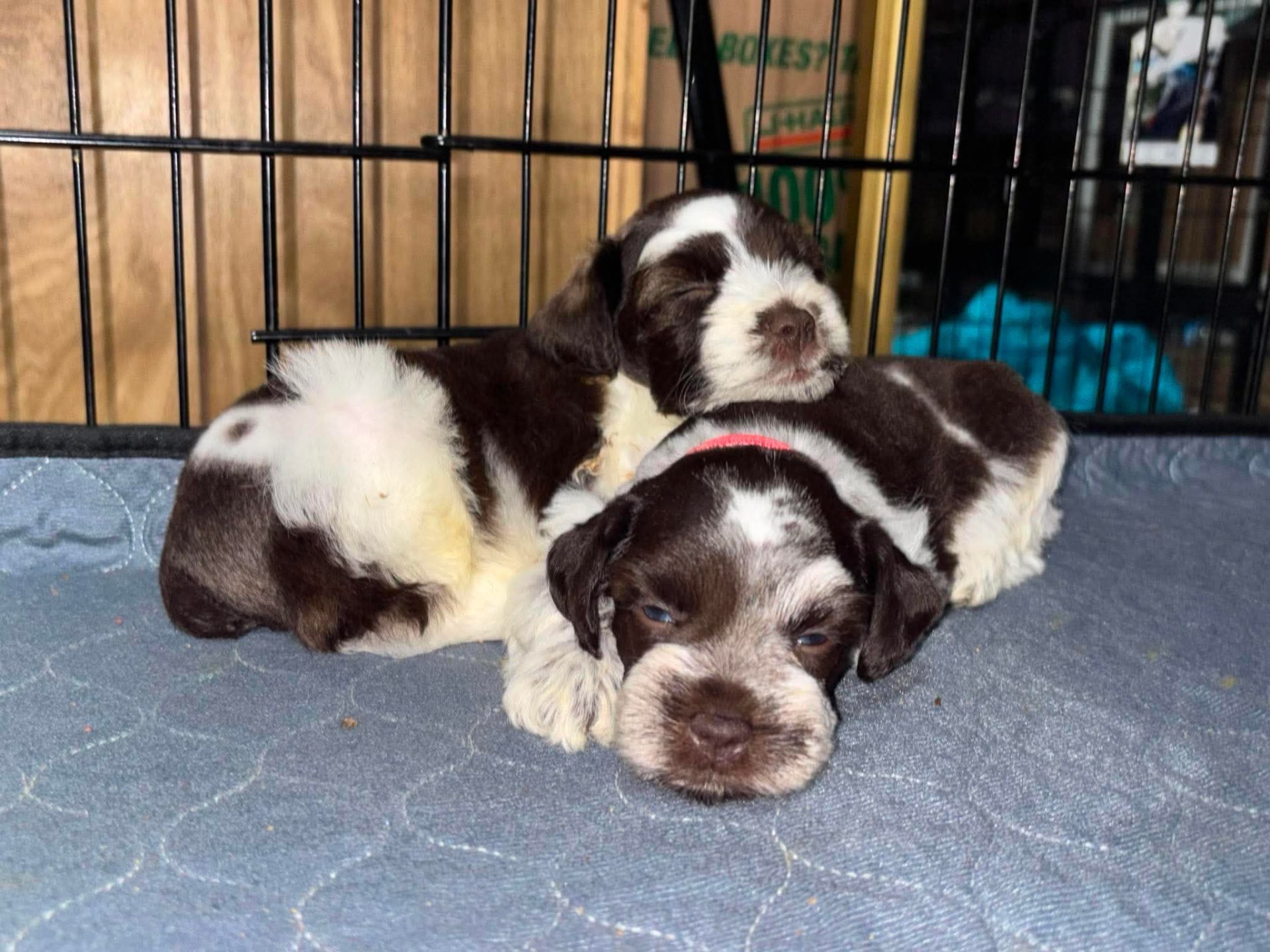
The first year sets almost everything: house training, confidence around strangers, grooming tolerance, body condition, and the relationship you will have with this dog for the next decade. None of it requires perfection — it requires routine.
This guide follows a Miniature Schnauzer puppy from pickup day through the first birthday, with the practical details families ask us about most.
Before pickup, work through Preparing Your Home for a New Puppy. For food specifics, see the nutrition guide.
The first 72 hours
Keep the first days small and quiet. A puppy that has just left its litter is processing an enormous amount of change, and a house full of visitors makes that harder, not easier.
- Carry the puppy straight to the potty spot when you arrive home, and wait there until it goes.
- Show one small area of the house — not the whole floor plan.
- Feed the exact food the breeder was using, on the breeder's schedule.
- Put the crate beside your bed for the first several nights so the puppy can hear you.
- Take one potty break in the middle of the night for the first week or two.
- Schedule a veterinary exam within 48 to 72 hours — most health guarantees require it.
Feeding schedule by age
| Age | Meals per day | Notes |
|---|---|---|
| 8–12 weeks | 4 | Small-breed puppy food; watch for low blood sugar in tiny puppies |
| 3–6 months | 3 | Teething begins; softening kibble slightly can help |
| 6–12 months | 2–3 | Adjust portions as growth slows |
| 12 months + | 2 | Transition to adult food over 7–10 days |
Measure every meal rather than free-feeding. Miniature Schnauzers gain weight easily, and lean puppies become healthier adults. Keep fatty table food out of the picture entirely — this breed's pancreatitis risk is real and starts young.
Potty training that actually works
House training is a schedule problem, not an obedience problem. A young puppy can hold its bladder roughly one hour per month of age, plus one — a three-month-old puppy needs an outing about every four hours during the day, and far more often after eating, sleeping, or playing.
- Take the puppy out on waking, after every meal, after play, and before bed.
- Go to the same spot each time and wait quietly rather than entertaining.
- Reward within two seconds of finishing, outside, with a small treat.
- Supervise or crate — a loose, unwatched puppy is how accidents happen.
- Clean accidents with an enzymatic cleaner so the scent does not invite a repeat.
- Never punish an accident you did not witness. It teaches hiding, not holding.
Most Miniature Schnauzers are reliably house trained between four and six months with consistent handling, and puppies that started potty-pad or litter habits with the breeder often get there sooner.
Vaccines, deworming, and vet visits
Puppies typically receive a DHPP series at roughly 6–8, 10–12, and 14–16 weeks, with rabies around 12–16 weeks depending on state law and your veterinarian's protocol. Additional vaccines — bordetella, leptospirosis, canine influenza — depend on lifestyle and regional risk, which in Northern California often means considering rattlesnake vaccination and foxtail season as well.
- Follow your veterinarian's schedule; do not skip boosters because the puppy 'seems fine.'
- Start flea, tick, and heartworm prevention on your vet's recommendation.
- Avoid dog parks and unknown dogs until the series is complete — but do not avoid socialization entirely.
- Bring a stool sample to early appointments so parasites can be caught quickly.
Teething and mouthing
Adult teeth come in between roughly three and seven months, and chewing peaks during that period. Puppies also bite in play — normal behavior that needs redirecting, not punishing.
- Keep three or four safe chew options rotating; frozen wet washcloths help sore gums.
- When teeth touch skin, stop the game for ten seconds. Consistency teaches faster than volume.
- Check at six months that no baby canines are retained beside the adult teeth — ask your vet.
- Start brushing teeth now. Small breeds are prone to dental disease and early habits pay off.
Starting grooming early
Book the first professional groomer visit around twelve to sixteen weeks, even if the coat does not need much. The goal is a pleasant first experience rather than a haircut.
- Brush a little every day so the tool becomes ordinary.
- Touch and hold each paw for a few seconds at a time, with treats.
- Run clippers near the puppy without cutting, just for the sound.
- Wipe the beard after meals from day one.
Full coat detail is in the Miniature Schnauzer grooming guide.
Adolescence: six to twelve months
Somewhere around seven months, a well-behaved puppy often becomes selectively deaf. This is normal adolescence, not a training failure. Keep the leash on, go back to rewarding recall generously, and lower your criteria for a few weeks rather than escalating corrections.
Discuss spay or neuter timing with your veterinarian; for small breeds this is commonly done between six and twelve months. Continue enrichment — a bored adolescent Miniature Schnauzer will invent a job, and you may not like the one it picks.
Frequently asked questions
- How often should a Miniature Schnauzer puppy eat?
- Four meals a day from eight to twelve weeks, three from three to six months, and two to three from six to twelve months. Measure portions rather than leaving food out.
- How long does it take to potty train a Miniature Schnauzer?
- Most are reliable between four and six months with a consistent schedule, close supervision, and immediate rewards outdoors. Puppies started on pads or litter by the breeder often progress faster.
- When can my puppy go on walks in public?
- Talk to your veterinarian, but generally after the final vaccine booster around sixteen weeks. Before that, carry the puppy to public places so it can watch the world safely.
- Should I crate train my Miniature Schnauzer?
- Yes. A crate gives the puppy a safe den, prevents accidents and destructive chewing, and makes travel and any future veterinary stay far less stressful.
- How much sleep does a puppy need?
- Sixteen to twenty hours a day. Overtired puppies get nippy and frantic; scheduled naps in the crate solve more behavior problems than most owners expect.
Routine, patience, and early exposure produce the calm, confident adult Miniature Schnauzer everyone wants. Keep the schedule, protect the socialization window, feed lean, and start grooming before it is needed.
We stay in touch with our families through the first year and beyond — questions are always welcome.
Meet our available Miniature Schnauzer puppies, see our upcoming litters, or learn about our program.
Socialization from 8 to 16 weeks
The socialization window closes around sixteen weeks. Everything a puppy meets calmly before then tends to stay unremarkable for life. This is the single highest-value work you will do all year.
A safe socialization plan before full vaccination
Quality beats quantity. One calm, positive experience is worth more than five overwhelming ones. If the puppy freezes or tucks its tail, increase distance and let it observe instead of forcing contact.