Breed Guide
The Complete Guide to Miniature Schnauzers
Everything a first-time owner should understand about the Miniature Schnauzer — history, temperament, size, coat colors, grooming demands, health, and daily life with the breed.
·14 min read
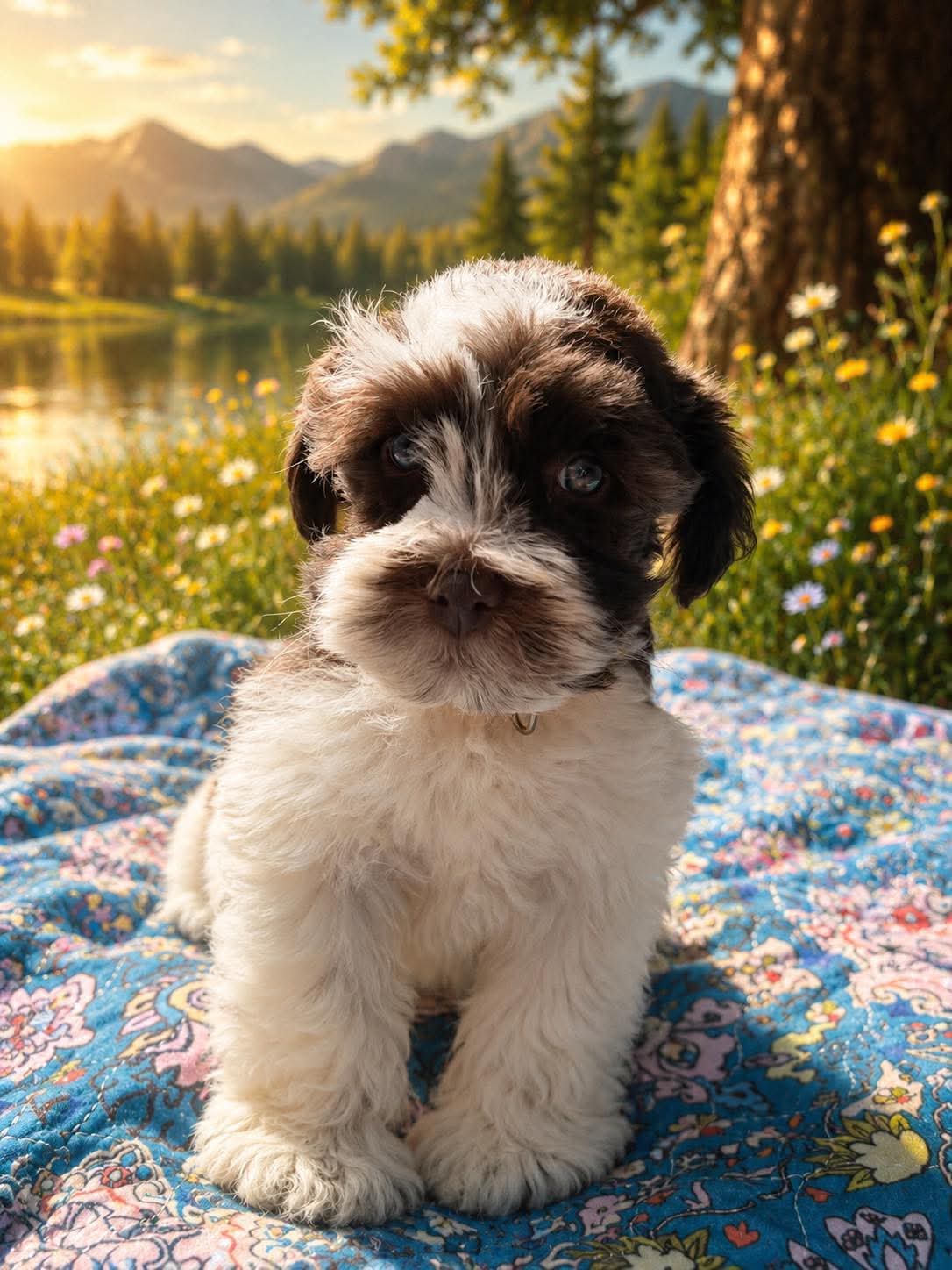
The Miniature Schnauzer is one of the most consistently popular companion dogs in the United States, and for good reason. It is small enough for an apartment, sturdy enough for a ranch, clever enough to learn almost anything you are patient enough to teach, and affectionate in a way that surprises people who expect a terrier to be aloof. Families who live with one rarely go back to another breed.
This guide is written from the perspective of a small family breeding program in Magalia, California, in the foothills of Butte County. We raise our puppies underfoot — in the kitchen, in the living room, around visiting grandchildren and the daily noise of a working household — and much of what follows comes from watching litters grow up and from staying in touch with the families who take them home across Northern California and the rest of the United States.
If you are still deciding whether this breed belongs in your home, read this page first, then move on to Everything You Need to Know Before Buying a Miniature Schnauzer Puppy. If you already know the Miniature Schnauzer is your dog, you can see who is home right now on our available puppies page or add your family to the waiting list.
What is a Miniature Schnauzer?
A Miniature Schnauzer is a small German companion and ratting dog, typically 12 to 14 inches tall at the shoulder and 11 to 20 pounds, with a wiry double coat, a distinctive beard and eyebrows, and a bold, people-focused temperament. The breed is classified in the Terrier Group by the American Kennel Club, but it was developed as a farm dog and family guardian rather than as a hunting terrier, which is why it tends to be friendlier with people and other dogs than many of its terrier cousins.
| Trait | Typical range |
|---|---|
| Height | 12–14 inches at the withers |
| Weight | 11–20 pounds |
| Lifespan | 12–15 years |
| Coat | Wiry double coat; low shedding |
| Grooming | Brushing 2–3x weekly; trim every 6–8 weeks |
| Exercise | 45–60 minutes daily, plus mental work |
| Good with kids | Yes, with normal supervision |
| Barking | Moderate to high without training |
A short history of the breed
The Schnauzer originated in southern Germany, where medium-sized farm dogs guarded property, drove livestock to market, and kept barns free of vermin. The name comes from the German word for muzzle or snout — a nod to the breed's unmistakable whiskered face. Breeders in the late nineteenth century worked to create a smaller version of the Standard Schnauzer, most likely crossing small Standards with Affenpinschers and Poodles, and by the 1890s the Miniature Schnauzer was being shown in Germany as a distinct breed.
The breed reached the United States in the 1920s and has been in the top thirty most-registered American breeds for decades. That history matters for owners today: the Miniature Schnauzer was bred to work closely with people all day, to alert the household to anything unusual, and to be small enough to live indoors. Those three instincts explain almost everything a modern owner experiences — the shadowing, the doorbell barking, and the deep attachment to family.
Miniature Schnauzer temperament and personality
Miniature Schnauzers are famously described as 'a big dog in a small package.' They are confident without being fragile, comic without being silly, and unusually tuned in to human emotion. A well-bred, well-socialized Miniature Schnauzer will greet guests, settle at your feet in the evening, and follow you from room to room during the day.
Traits most families notice first
- Velcro attachment. They want to be where you are. This makes them wonderful companions and poor candidates for households where the dog is alone ten hours a day.
- High intelligence. They learn commands quickly and problem-solve creatively, which means they also learn the sound of the treat bag and the route to the counter.
- Alert barking. The breed was built to announce visitors. Barking is manageable with early training, but pretending it will not happen is a mistake.
- Playfulness that lasts. Many Miniature Schnauzers keep a puppy-like sense of humor well into their senior years.
- Sensitivity. Harsh corrections shut them down. Reward-based training works dramatically better.
Temperament is not luck. It comes from the parents, from what happens in the first eight weeks, and from what you do in the first eight months. We cover the middle piece in our puppy care guide and the last piece in the training guide.
Size, coat colors, and appearance
The AKC breed standard recognizes four colors for the show ring: salt and pepper, black and silver, solid black, and white. Outside the ring, responsible breeders also produce liver, liver pepper, liver tan, and parti-colored dogs, which are genetically Miniature Schnauzers in every respect and are enormously popular with pet families.
Common coat colors explained
- Salt and pepper — the classic banded gray coat with lighter furnishings on the legs and beard.
- Black and silver — a black body with silver eyebrows, beard, chest and legs.
- Solid black — a dense, even black coat that can sun-fade slightly.
- Liver, liver pepper, and liver tan — warm chocolate-based coats produced by a recessive gene; often paired with lighter eyes.
- Parti — a white base with colored patches. Our recent puppies, including Violet, Fred and Major, were liver tan parti.
Color should never be the first thing you shop for. Health, temperament, and how a puppy was raised matter far more over a 13-year life. That said, there is nothing wrong with loving a particular look — many of the families on our waiting list tell us a specific coat is what first brought them to the breed.
Grooming: what the coat actually requires
Miniature Schnauzers shed very little, which is why they are so often chosen by families sensitive to dog hair. The trade-off is real grooming work. A wiry double coat mats without brushing, and the beard and leg furnishings collect everything the dog walks through.
- Brush two to three times weekly with a slicker brush and a metal comb, paying attention to the beard, armpits, and behind the ears.
- Book a professional trim, clip or hand-strip every six to eight weeks.
- Bathe roughly every three to four weeks, or when the dog is genuinely dirty.
- Rinse and dry the beard after meals to prevent staining and odor.
- Trim nails every two to three weeks and check ears at the same time.
We start bath and handling practice while puppies are still with us, which is why our grooming guide begins at eight weeks and not at the first groomer appointment.
Exercise, enrichment, and daily routine
Plan on 45 to 60 minutes of activity daily for an adult, split into a morning walk, an evening walk, and some off-leash play in a fenced area. Just as important is mental work: a Miniature Schnauzer that gets ten minutes of training, a snuffle mat, or a food puzzle each day is calmer than one that only gets a long walk.
Health and lifespan
Miniature Schnauzers commonly live 12 to 15 years. The breed's known concerns include hyperlipidemia and pancreatitis, urinary stones, progressive retinal atrophy, myotonia congenita, and portosystemic shunts. Responsible breeders screen breeding stock, keep detailed veterinary records, and are candid about what is and is not tested.
The single most protective thing an owner can do is manage fat intake — this breed is genuinely prone to pancreatitis, and table scraps are a real risk, not a superstition. Our health guide and nutrition guide go through both topics in detail.
Is a Miniature Schnauzer right for your family?
The breed is an excellent fit if…
- Someone is home for a good part of the day, or the dog can come along with you.
- You want a low-shedding dog and accept a grooming budget.
- You have children old enough to be gentle, or you are willing to supervise closely.
- You enjoy training and want a dog that participates in family life.
Look at another breed if…
- The dog will be alone for long workdays with no midday break.
- Your housing has strict noise rules and you are not prepared to train an alert barker.
- You want a dog that requires no coat maintenance.
Finding a Miniature Schnauzer in California and beyond
We are based in Magalia, in Butte County, and regularly place puppies with families from Paradise, Chico, Oroville, Yuba City, Redding, Sacramento and the wider Northern California region. Families frequently drive up for pickup and make a day of it.
Families outside California are welcome to inquire as well. We work with buyers throughout the United States and can discuss ground transport or a flight nanny escort where it is appropriate for the puppy. Placement is always based on fit first — we would rather say no to a sale than send a puppy somewhere it will not thrive. You can start that conversation on our contact page or through the reservation form.
Frequently asked questions
- How big do Miniature Schnauzers get?
- Most Miniature Schnauzers mature between 12 and 14 inches tall and 11 to 20 pounds. Dogs advertised as 'teacup' or 'toy' Miniature Schnauzers are outside the standard and are often bred down in ways that increase health risk.
- Are Miniature Schnauzers hypoallergenic?
- No dog is truly hypoallergenic, but the Miniature Schnauzer's wiry, low-shedding double coat releases far less hair and dander into the home than most breeds, which is why many allergy-sensitive families do well with them.
- Do Miniature Schnauzers bark a lot?
- They are natural alert dogs and will announce visitors, delivery drivers, and unfamiliar sounds. With early training that rewards quiet and teaches a reliable 'enough' cue, barking becomes brief and manageable rather than constant.
- How long do Miniature Schnauzers live?
- Typically 12 to 15 years. Lean body condition, a low-fat diet, dental care, and regular veterinary checkups have the biggest influence on reaching the upper end of that range.
- Are Miniature Schnauzers good with children?
- Yes. They are sturdy for their size and genuinely enjoy children, provided kids are taught to handle them gently and the dog always has a quiet place to retreat to.
- How much does a Miniature Schnauzer puppy cost?
- Well-bred puppies from breeders who health-screen their parent dogs and provide full veterinary care typically fall in the low-to-mid four figures across the United States, with regional variation. Prices far below that range usually indicate corners were cut somewhere.
The Miniature Schnauzer earns its reputation. It is a small dog with a full personality, a coat that asks for care but gives back a clean house, and a temperament that bonds hard to the people it lives with. Choose one thoughtfully and you get twelve to fifteen years of a dog that wants to be part of everything you do.
If this sounds like the dog you have been describing to your family, the next step is simple: look at who is available now, or get your name on the list for an upcoming litter so you are not waiting from the back of the line.